Emergency Flood Cleanup 101: A Delaware County Homeowner’s Guide to Mastering Fast Recovery
- info603880
- Mar 31
- 5 min read
Hey there, neighbor. If you’re reading this while standing in a couple of inches of water in your basement in Media, Upper Darby, or Havertown, take a deep breath. We know exactly how you feel. One minute you’re enjoying a quiet evening, and the next, a heavy SEPA storm or a stubborn sump pump failure has turned your home into an indoor swimming pool. It’s overwhelming, messy, and honestly, a little scary.
But here’s the good news: you’ve got this. Whether it’s a burst pipe or the Darby Creek overflowing again, mastering emergency flood cleanup is all about moving fast and knowing the right steps to take. At My Water Damage Hero, we’ve seen it all, and we’re here to walk you through the recovery process so you can get your life back to normal.
The "Golden Window": Why Speed is Your Best Friend
In the world of water damage restoration, time is the one thing you can’t afford to waste. You have roughly 24 to 48 hours before things go from "wet mess" to "mold nightmare." Within two days, standing water begins to seep into drywall, warp floorboards, and invite mold spores to start a party you definitely weren't invited to.
In Delaware County, our humidity can be pretty high, which only speeds up the damage. That’s why an immediate response isn’t just a good idea, it’s essential for saving your home’s structure and your precious belongings.
Step 1: Safety First, Everything Else Second
Before you grab a bucket or a shop vac, stop. Your safety is more important than your carpet.
Turn off the power: If the water has reached any electrical outlets or your fuse box is in a damp area, do not enter the water. Call an electrician or PECO if you can't safely reach the breaker.
Stop the flow: If the flooding is coming from a burst pipe, shut off the main water valve immediately. If it's nature knocking at your door, there's not much you can do to stop the intake, but you can start preparing for the extraction.
Gear up: Wear rubber boots and gloves. You don’t know what’s in that water, especially if it’s a backup involving sewage. If you think you might be dealing with a sewer line issue, check out our guide on what you need to know before calling for sewage clean up.
Step 2: Assessing the Damage (What Kind of Water Is This?)
Not all floodwater is created equal. In the restoration industry, we categorize water to determine how dangerous it is:
Category 1 (Clean Water): Think broken supply lines or an overflowing sink. It’s "clean," but it won't stay that way for long once it hits the floor.
Category 2 (Gray Water): This is water from dishwashers or washing machines. It might contain chemicals or dirt that can make you itchy or sick.
Category 3 (Black Water): This is the serious stuff. Sewage, rising river water, or stagnant water that has been sitting for days. This requires professional sewage clean up and specialized sanitization to ensure your home is safe to live in again.

Step 3: Water Extraction (The Big Pump-Out)
Once it's safe to enter, the real work begins. You need to get the standing water out, now. A standard shop vac can handle small spills, but for a flooded basement in Delco, you’re going to need industrial strength.
Professionals use truck-mounted extraction units that can pull hundreds of gallons of water out in minutes. If you’re doing this yourself, remember that every gallon of water weighs about 8.3 pounds. It’s back-breaking work, and if you miss even a little bit under the floorboards, you’re looking at future mold remediation costs.
If you’re feeling overwhelmed by the volume of water, it might be time to look for emergency flood cleanup in SEPA.
Step 4: The Science of Drying and Dehumidification
Just because you can't see the water anymore doesn't mean your house is dry. Materials like wood, drywall, and insulation are porous. They soak up water like a sponge. This is where many homeowners make a mistake, they stop once the floor looks dry.
To truly master recovery, you need:
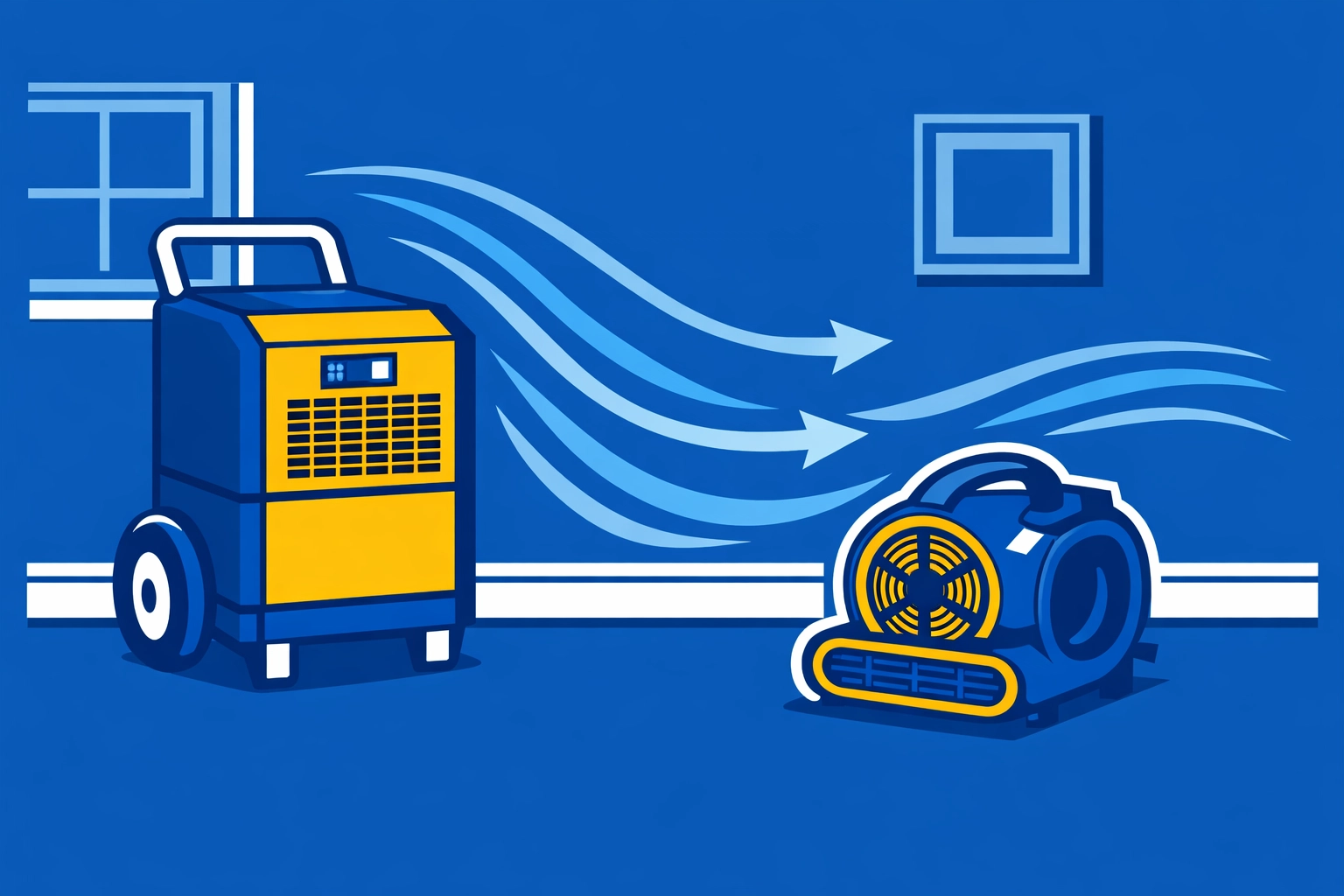
Air Movers: These aren't your average box fans. They are high-velocity fans designed to pull moisture out of surfaces.
Industrial Dehumidifiers: These machines pull gallons of moisture out of the air every day, preventing that "musty basement" smell and structural rot.
Step 5: Mold Prevention and Remediation
In Delaware County, the clock is always ticking toward mold growth. Mold loves damp, dark spaces (like your basement or behind your baseboards). If you’ve had a leak and didn’t get it dry within 48 hours, there’s a high chance mold has already started to take root.
If you start seeing dark spots or smelling an earthy, pungent odor, don't ignore it. Mold remediation is a specialized process that involves containing the area so spores don't spread to the rest of your house. For those in our neighboring areas, we’ve put together a guide on mold testing vs. remediation in Bucks County that applies just as well here in Delco.

Step 6: Sanitizing and Restoration
After the water is gone and the area is dry, it’s time to clean. This isn't just about appearance; it's about health. Floodwater can carry bacteria and pathogens. You’ll need to use antimicrobial treatments on all affected surfaces.
Items that are "porous" (think mattresses, stuffed animals, and some carpets) usually have to be tossed if they’ve been soaked in Category 2 or 3 water. It’s heartbreaking, but your family’s health is worth more than a rug. For everything else, deep cleaning and professional-grade sanitizers are the way to go.
Pro Tip: Check Your Local Delaware County Resources
Did you know there’s help available for Delco residents? The Delaware Emergency Management Agency sometimes offers assistance programs for major flooding events. You can often find help with mucking out or minor structural repairs through local flood assistance programs. It’s always worth a call to 1-844-413-0038 to see if you qualify for help during widespread disasters.
Why Professional Help is the Hero Move
Look, we’re all about the DIY spirit here in SEPA. But water damage restoration is one of those things where "almost right" can still lead to "total disaster." A professional team doesn't just bring fans; they bring moisture meters and thermal imaging cameras to find the water hiding inside your walls.
If you want to make sure your home is truly safe, check out our quick start guide to emergency flood cleanup. It helps you prioritize your tasks in those first few frantic hours.
Prevention: The Best Recovery is the One You Don't Need
Once the crisis is over, let’s make sure it doesn't happen again.
Service your sump pump: Don't wait for a storm to find out it’s broken.
Clean your gutters: Blocked gutters send water straight into your foundation.
Daily Checks: It sounds tedious, but a 5-minute walk-around can save you thousands. We even have a daily home check guide for Delaware County homeowners to make it easy.
You’ve Got This!
Dealing with a flood is a marathon, not a sprint. It’s okay to feel stressed, but remember that thousands of your neighbors in Delaware County have been through this and come out the other side with a home that’s as good as new.
By following these steps, securing your safety, extracting the water fast, and ensuring everything is bone-dry, you are mastering your recovery. And hey, if it gets to be too much, remember that your local heroes are just a phone call away.

Stay dry out there, Delco! Whether you're in Chester, Drexel Hill, or Newtown Square, we're rooting for you and your home. For more tips on keeping your property safe in the SEPA area, feel free to browse our full blog sitemap.
Comments