Water Damage Restoration Secrets Revealed: What Experts Want Bucks County Homeowners to Know
- info603880
- Mar 28
- 5 min read
If you’ve ever walked downstairs to your basement in Doylestown or Perkasie only to hear that dreaded "squish" under your feet, you know the instant panic that sets in. Water damage is one of those household nightmares that feels like it’s spiraling out of control the second it starts. Whether it's a burst pipe, a heavy rainstorm overwhelming your sump pump, or a slow leak behind the fridge, the stress is real.
But here’s the good news: you don't have to face it alone. At My Water Damage Hero, we’ve seen it all across Bucks County, Montgomery County, and Berks County. We’ve spent years in the trenches (sometimes literally), and today, I’m pulling back the curtain. There are things the pros know that can save you thousands of dollars and a whole lot of heartbreak if you act fast.
Let’s dive into the "secrets" of water damage restoration that every homeowner should have in their back pocket.
1. The 24-to-48-Hour "Golden Window"
In the restoration world, time isn’t just money, it’s the difference between a simple dry-out and a full-blown mold remediation project.
Mold is opportunistic. It doesn't need much to start growing, just some moisture, a food source (like your drywall or carpet padding), and about 24 to 48 hours. If your home stays wet longer than two days, you aren't just dealing with water anymore; you’re dealing with a biological issue.
Expert Tip: Even if the water seems "clean" (like from a supply line), it becomes "grey water" or even "black water" very quickly as it mixes with dust and floor contaminants. Don’t wait for the weekend to end to call for help. Emergency flood cleanup is a race against the clock.
2. What You Can’t See Can Definitely Hurt You
You might look at a wall and think, "Hey, it looks dry to me!" Unfortunately, your eyes are lying to you. Water is a master of disguise. It travels through the path of least resistance, often seeping behind baseboards, under laminate flooring, and deep into the structural studs of your home.
This is where the pros use the "cool toys." We don't just guess if a room is dry; we use technology to prove it.
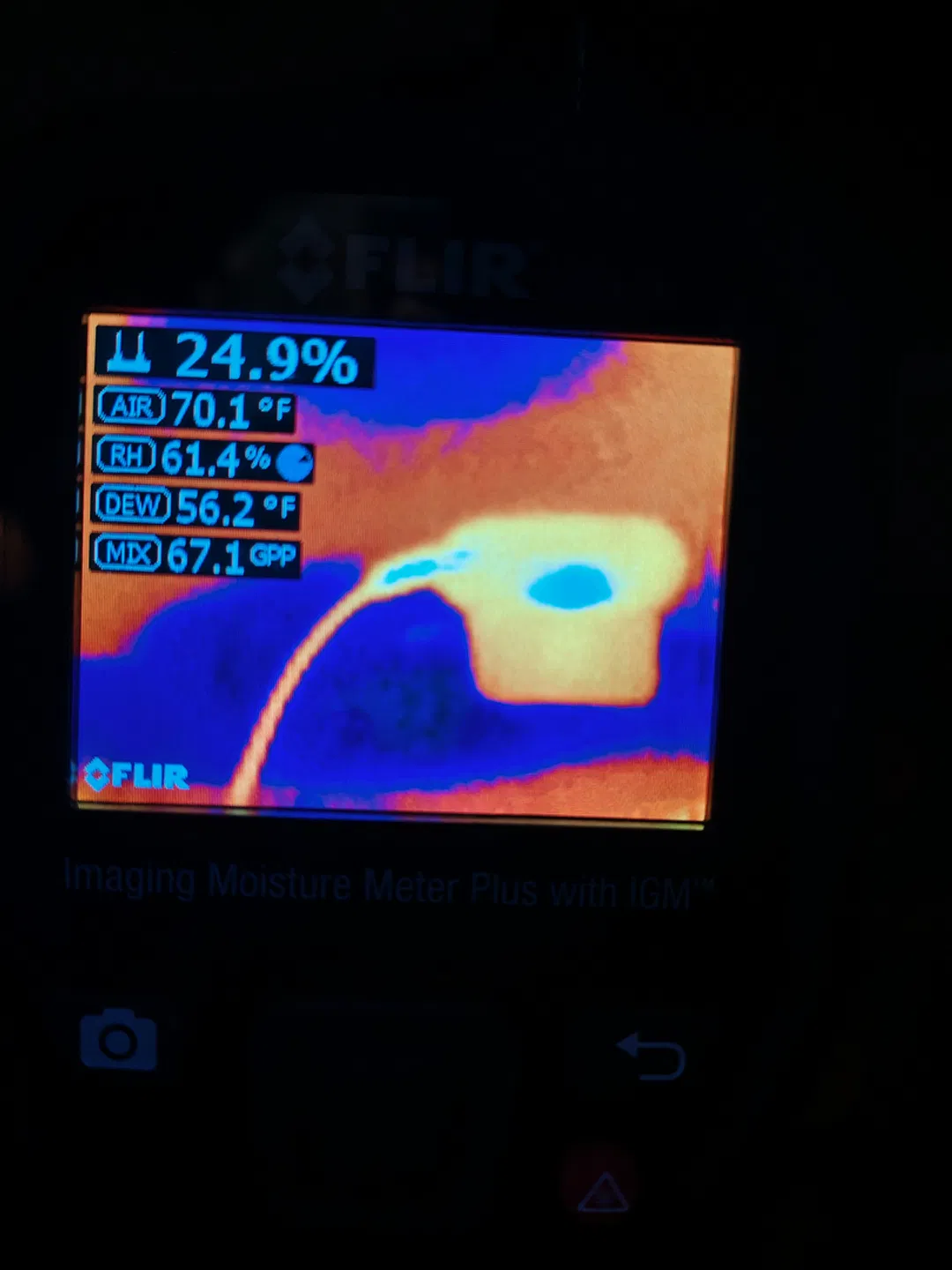
We use FLIR (Forward-Looking Infrared) cameras and moisture meters to find the hidden pockets of water. These tools detect temperature differences, wet spots are usually cooler, and provide precise moisture readings. If a moisture meter shows a reading above 20% in your drywall, that wall is still a breeding ground for mold, even if it feels dry to the touch.
3. The "Fans and Windows" Myth
A common mistake we see homeowners in Chester and Delaware counties make is thinking that opening the windows and pointing a few household box fans at the floor will do the trick.
While your intentions are good, household fans aren't designed to move enough air to pull moisture out of dense materials like subfloors or cabinetry. In fact, if you just move the air around without controlling the humidity, you might actually be spreading mold spores further into your home.
Professional water damage restoration involves a scientific process called "Psychrometry." It’s the study of air and water vapor. We use industrial-grade air movers and LGR (Low Grain Refrigerant) dehumidifiers. These machines don't just blow air; they "thirstily" pull moisture out of the air and the materials themselves, dropping the relative humidity to levels where mold simply cannot survive.
4. Why Sewage Cleanup is Never a DIY Job
Let’s talk about the one thing nobody wants to talk about: sewage. Whether it’s a backup from the street or a toilet overflow, sewage clean up is a serious health hazard.
This isn't just "dirty water." It’s Category 3 water, which is filled with pathogens, bacteria, and viruses. Trying to clean this yourself with a mop and some bleach is dangerous. You need specialized personal protective equipment (PPE) and professional-grade antimicrobial treatments to ensure your home is actually safe to live in again. If you see dark water or smell that unmistakable odor, please: back away and call in the experts for emergency flood cleanup.

5. Bucks County’s Unique Challenges
Living in our neck of the woods comes with some specific risks. Many of our beautiful homes in Bucks and Montgomery counties have older foundations or are situated in areas with high water tables.
Sump Pump Failures: This is the #1 cause of basement flooding here. If your pump is more than 5-7 years old, it’s a ticking time bomb. Check out our guide on sump pump maintenance to avoid an expensive surprise.
Hydrostatic Pressure: After a heavy Pennsylvania rain, the soil around your foundation becomes saturated. This pressure can push water through tiny cracks in your basement floor or walls.
Frozen Pipes: Our winters can be brutal. A pipe that freezes and thaws in an attic can cause massive damage across multiple floors before you even realize what’s happening.
6. Don’t Throw Everything Away Just Yet!
When you’re standing in a puddle, your first instinct might be to toss everything in a dumpster. But wait! Modern restoration techniques can save more than you think.
We can often save:
Hardwood floors: If we get to them fast enough with specialized floor drying mats.
Documents and Photos: Through a process called freeze-drying.
Electronics: If they are treated properly before being powered on.
Upholstery: Professional water extraction and sanitization can work wonders.
Before you clear out your life’s possessions, let a professional assessment determine what is truly "salvageable."
7. The Hidden Danger of Mold After the Dry-Out
Sometimes, the water is gone, the carpet is dry, and you think you’re in the clear. Then, two weeks later, you notice a "musty" smell. Or maybe your kids start sneezing more than usual.
Mold doesn't always show up as a black fuzzy patch on the wall. It can grow inside the wall cavities or under the floorboards. This is why professional mold remediation is so vital. We don't just kill the mold; we remove it and fix the source of the moisture so it doesn't come back.
Your Quick Emergency Checklist
If you find water in your home right now, don't panic. Follow these steps:
Safety First: If the water is deep, turn off the electricity to the affected area at the breaker box. Do not walk through standing water if the power is on.
Stop the Source: If it’s a pipe leak, turn off the main water valve.
Document Everything: Take photos and videos for your insurance company before you start moving things.
Protect Your Furniture: Place aluminum foil or wood blocks under furniture legs to prevent "wicking" (where the wood sucks up the water and stains the carpet).
Call the Heroes: Reach out for professional water damage restoration immediately.
We’re Here to Help You Recover
At My Water Damage Hero, we’re more than just a cleaning crew. We’re your neighbors. We know the stress of seeing your home underwater, and our goal is to get your life back to normal as quickly and smoothly as possible. From the first gallon of water we extract to the final piece of drywall we replace, we’ve got your back.

Whether you are in Bucks, Montgomery, Berks, Delaware, or Chester County, remember: you don't have to be the hero of this story: that’s our job!
If you’re dealing with a leak, a flood, or a mystery smell, don’t wait. Give us a call or visit our About Us page to learn more about how we can protect your home and your health. Stay dry out there, Bucks County!
Comments