Emergency Flood Cleanup 101: A Beginner's Guide to the First 24 Hours
- info603880
- Jan 23
- 5 min read
You just walked into your home and your heart sank. There's water everywhere. Maybe a pipe burst, your sump pump failed, or that wild storm we just had in Montgomery County finally found its way into your basement.
First things first: take a deep breath. Panic is totally natural, but here's the good news: what you do in the next 24 hours can make a huge difference in how much damage you're dealing with long-term. Mold can start growing within 24 to 48 hours on damp surfaces, so time really is of the essence here.
Let's walk through this together, step by step. You've got this.
Step 1: Safety First (Seriously, Don't Skip This)
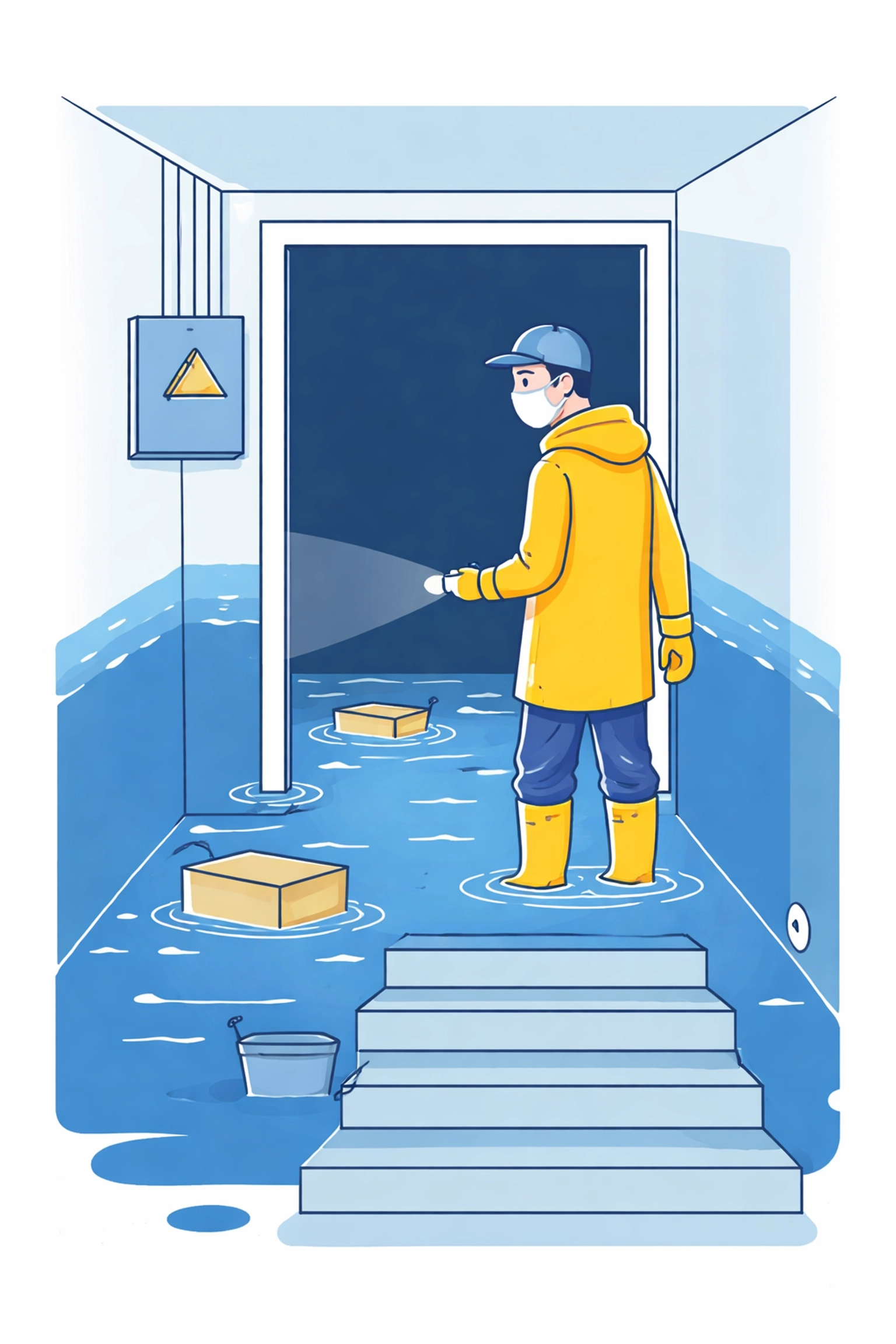
Before you even think about grabbing a mop, you need to make sure it's actually safe to enter your home. Water and electricity are a dangerous combination, and your safety matters more than any soggy carpet.
Here's what to check:
Turn off the power. If you can safely reach your electrical panel without stepping through water, flip the breaker to the affected area. If you can't get there safely, call your utility company or wait for a professional.
Don't wade into deep or murky water. You don't know what's in there: sharp objects, contaminants, or even electrical currents.
Skip the household vacuum. Regular vacuums and power tools are not designed for wet conditions and can be seriously dangerous.
Gear up. Long sleeves, long pants, rubber gloves, and waterproof boots are your friends right now. Floodwater can carry bacteria and other nasty stuff you don't want on your skin.
Once you've confirmed it's safe to move around, you can start tackling the problem.
Step 2: Find and Stop the Water Source
This sounds obvious, but in the chaos of the moment, it's easy to forget. Where is all this water actually coming from?
Is it a burst pipe under the sink? A leaking water heater? An overflowing washing machine? Maybe your roof took a hit during that last storm that rolled through Bucks County?
If the culprit is a pipe or appliance, locate your main water shut-off valve and turn it off. This will stop additional water from flooding in while you deal with what's already there.
Can't find the source? That's okay: this is exactly when you want to call in the pros. A water damage restoration team can track it down quickly with the right equipment.
Step 3: Document Everything Before You Touch It
I know your instinct is to start cleaning up immediately. But before you move a single item, grab your phone and start snapping photos.
Document:
Every room affected by water
Damaged furniture, electronics, and personal items
Water lines on walls (this shows how high the water reached)
Any visible structural damage
This documentation is gold when it comes to filing your insurance claim. Trust me, you'll thank yourself later. Make a written list too if you can: the more detailed, the better.
Step 4: Make Two Important Phone Calls
With your documentation in hand, it's time to reach out for help.
Call #1: Your insurance company. Report the water damage within 24 hours if possible. They'll walk you through your coverage and next steps. Some policies even cover professional emergency flood cleanup services, so ask about that.
Call #2: A water damage restoration company. Here in Montgomery, Berks, Bucks, Delaware, and Chester counties, you want someone local who knows our area and can respond fast. A family-owned company like My Water Damage Hero understands what homeowners in our communities are dealing with: from older homes with unique challenges to the specific weather patterns we face here in southeastern Pennsylvania.
Professional teams have industrial-grade equipment that can extract water and dry out your home way faster than fans from the hardware store. They're also trained to spot hidden moisture that can cause mold problems down the road.

Step 5: Start Removing Water (If It's Safe)
If you're dealing with a relatively small amount of clean water: we're talking less than a couple inches, power is off, and there's no visible structural damage: you can start removing water yourself while you wait for the pros.
Your options:
A wet/dry shop vac (not your regular vacuum!)
Good old-fashioned buckets and mops
Pushing water toward floor drains if you have them
For anything more significant, or if the water looks dirty or smells off, leave the heavy lifting to the professionals. Contaminated water (like sewage backup) requires special handling and protective measures.
Step 6: Save What You Can
Now it's time for triage. Not everything can be saved, but acting quickly gives your belongings the best chance.
Prioritize removing these items first:
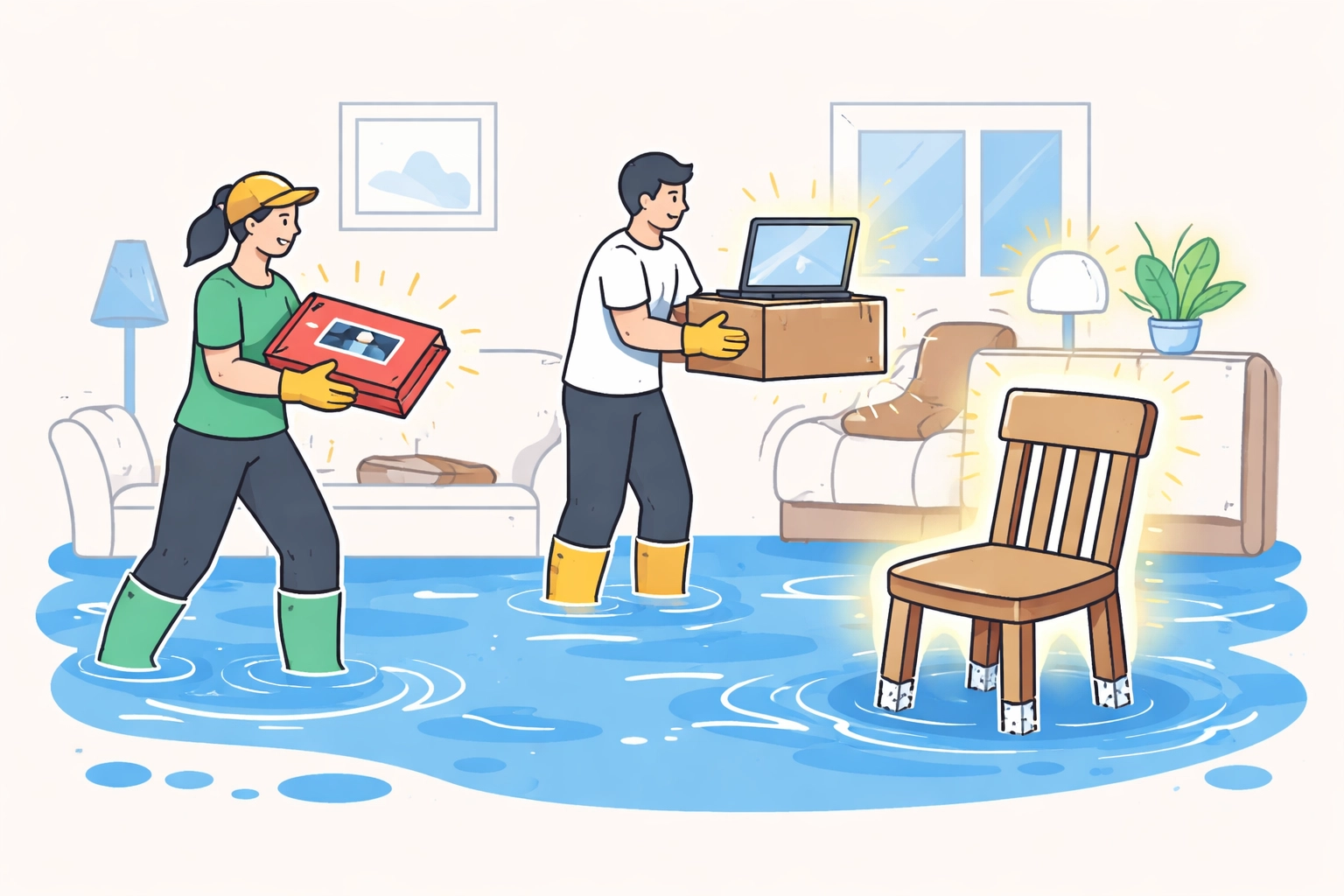
Important documents, photos, and financial records – Irreplaceable items come first
Electronics – Computers, TVs, gaming systems (don't plug them in until they're completely dry and inspected)
Wood furniture – Place aluminum foil or plastic under the legs to prevent further damage to floors
Fabrics and clothing – Get them out and hung up to dry
Sentimental valuables – Anything that can't be replaced
What should you toss? This is the hard part. Mattresses, heavily soaked carpeting, upholstered furniture that's been sitting in water, pillows, and foam items usually need to go. If it's been wet for more than two days, mold may already be growing inside even if you can't see it.
Step 7: Get Air Moving and Start Drying
Here's where you can really make a difference while waiting for professional help. The goal is to get as much air circulation as possible to slow down mold growth.
Your drying game plan:
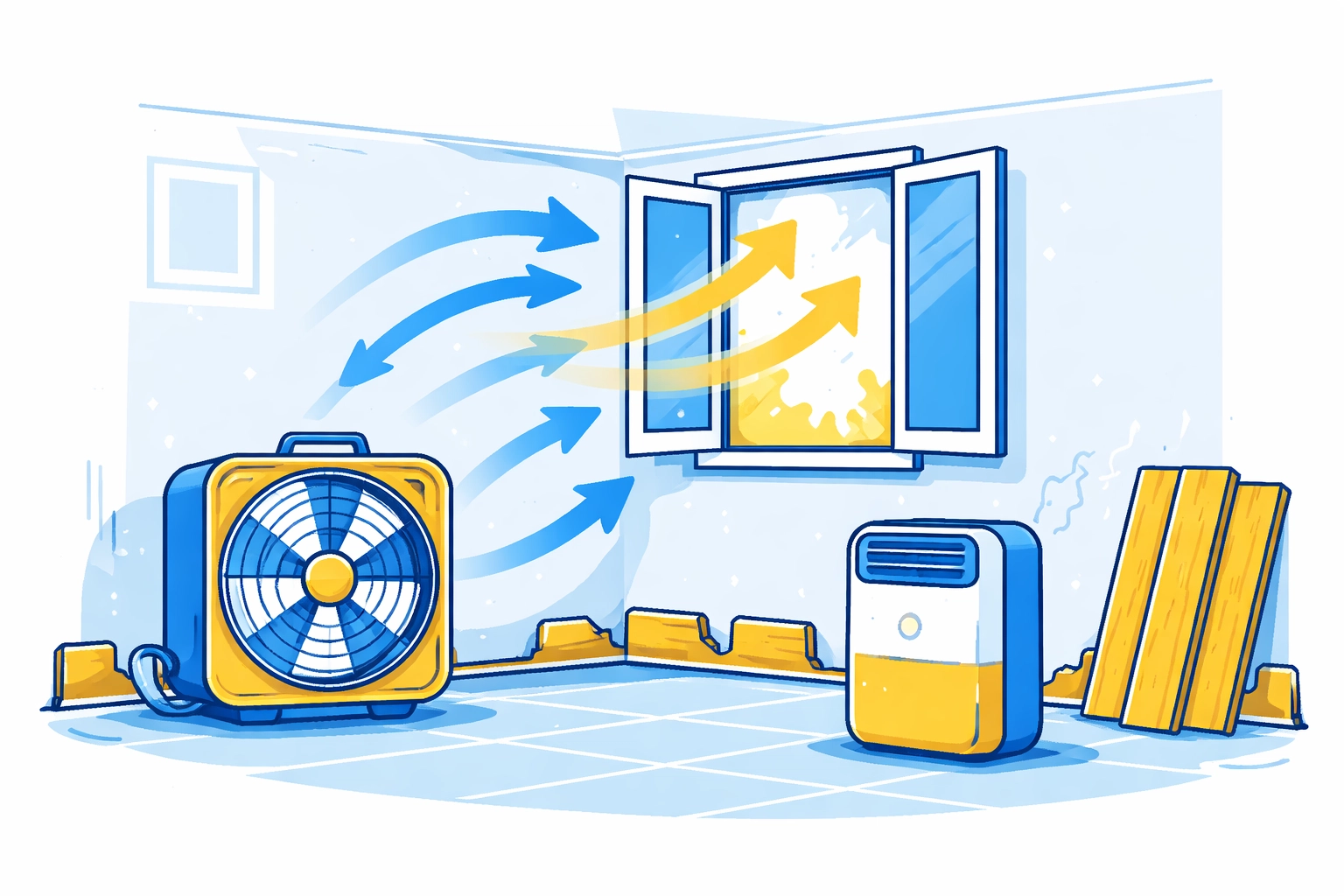
Open windows and doors (weather permitting) to air out the space
Set up fans to create cross-ventilation: point them toward windows or outside
Run dehumidifiers on the lowest humidity setting (around 30-35%) and keep them running continuously
Remove baseboards if you're comfortable doing so: this lets air reach the wall cavities where moisture loves to hide
Don't underestimate how long proper drying takes. Even if surfaces feel dry to the touch, moisture can linger in subfloors, drywall, and insulation. Professional restoration teams use moisture meters and infrared technology to find hidden wet spots that your eyes and hands can't detect.
For more tips on the drying process, check out our guide on essential water damage restoration tips.
Step 8: Clean and Disinfect
Once the water is out and things are drying, it's time to clean. Floodwater: even "clean" water from a burst pipe: can leave behind bacteria and contaminants.
Thoroughly clean all wet surfaces with hot water and dish or laundry detergent:
Flooring and concrete
Molding and trim
Wood and metal furniture
Countertops and appliances
If any drywall or insulation was contaminated with sewage or dirty floodwater, it needs to come out. No amount of cleaning will make that safe.
Don't Forget About You
After all that cleanup work, take care of yourself too. Wash up with soap and water when you're done. If you had any open cuts or scrapes exposed to floodwater, clean them thoroughly and apply antibiotic ointment. Wash your cleanup clothes separately in hot water.
And if you start feeling sick or get injured during cleanup, don't tough it out: see a doctor.
You Don't Have to Do This Alone
Look, dealing with emergency flood cleanup is stressful and exhausting. The first 24 hours are critical, but that doesn't mean you have to handle everything yourself.
Here in Chester, Delaware, Berks, Bucks, and Montgomery counties, our community looks out for each other. When water damage strikes, having a local, family-owned team in your corner can take a huge weight off your shoulders. We know these neighborhoods, we know these homes, and we know how to get your life back to normal as quickly as possible.
If you're in the middle of a water emergency right now, or you're dealing with the aftermath and need professional water damage restoration help, reach out. You don't have to figure this out alone( we're just a phone call away.)
Comments