7 Mistakes You're Making with Basement Flooding in Delaware County (Before Insurance Denies Your Claim)
- info603880
- Jan 31
- 6 min read
Your basement just flooded, and you're standing ankle-deep in water wondering where to even start. Whether it's from a burst pipe, storm runoff, or a failed sump pump, basement flooding in Delaware County is stressful, and it happens more often than you'd think. The rolling terrain, older housing stock, and unpredictable weather make basements here especially vulnerable.
Here's the thing: how you respond in the first 24 hours can make or break your insurance claim. One wrong move, like tossing soggy boxes before snapping photos or cranking up your box fan hoping it'll dry things out, and you could be facing thousands of dollars in out-of-pocket costs.
Let's walk through the seven biggest mistakes Delaware County homeowners make after basement flooding, so you don't become another claim denial statistic.
Mistake #1: Waiting Too Long to Start Water Extraction
You discover water in your basement at 10 PM on a Tuesday. It's late. You're exhausted. You figure you'll deal with it in the morning.
Don't do this.
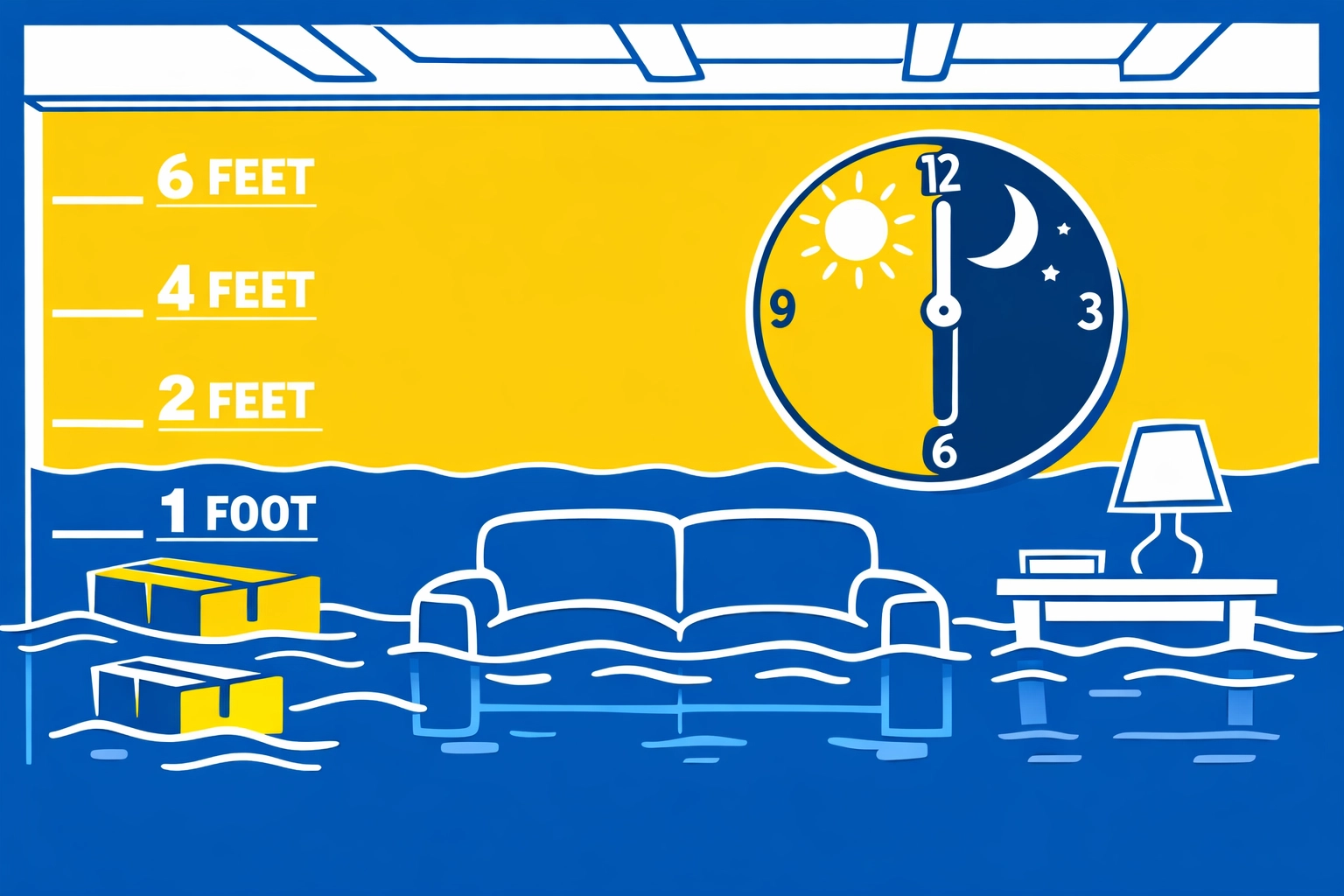
Water doesn't take a night off. In just 24 to 48 hours, standing water soaks into drywall, subflooring, insulation, and wooden framing. Mold spores start colonizing damp surfaces within that same window. The longer water sits, the more secondary damage occurs, and secondary damage is often what insurance companies push back on.
Emergency flood cleanup means exactly that: emergency. Call for professional water damage restoration as soon as you find the water. Even if it's midnight. Even if it's a holiday. Certified restoration teams in Delaware County operate 24/7 for this exact reason.
Mistake #2: Using Home Fans and Thinking That's Enough
Your instinct might be to grab every box fan, oscillating fan, and hair dryer in the house and aim them at the wet spots. While it feels productive, residential fans aren't designed for water damage restoration, and using them can actually make things worse.
Home fans can't generate the airflow or heat needed to pull moisture from structural materials like insulation, studs, and subfloors. They mostly push surface water around. Meanwhile, hidden moisture stays trapped, creating perfect conditions for mold growth behind your walls.
What professionals use instead:
Air movers – Industrial fans that create high-velocity airflow to evaporate moisture quickly
Commercial dehumidifiers – Units that remove gallons of water per day from the air, not just move it around
Moisture meters – Tools that measure hidden moisture you can't see or feel
Insurance adjusters know the difference. If you try the DIY fan route and mold shows up two weeks later, your claim could get denied because you didn't mitigate damage properly.
Mistake #3: Not Documenting Everything for Your Insurance Claim
You're soaking wet, exhausted, and just want the water gone. The last thing on your mind is taking photos. But here's what happens if you skip documentation: your insurance adjuster shows up three days later, sees a clean (or partially cleaned) basement, and has no proof of how bad things really were.
Before you touch anything, document:
The water level (use a ruler or tape measure in the photo)
Every damaged item, from furniture to boxes to electronics
Water stains on walls and where the waterline hit
The source of the flooding if visible (broken pipe, sump pump failure, etc.)
Surrounding areas that got wet (carpets, stairs, adjacent rooms)
Take photos and video. Walk through the space narrating what you see. Time-stamp everything. Text or email the files to yourself so they're dated.
Only after you've documented should you start moving items or extracting water. And keep every receipt, equipment rentals, cleaning supplies, hotel stays if you had to leave, because those are reimbursable expenses.

Mistake #4: Throwing Away Damaged Items Before the Adjuster Sees Them
That soggy couch is ruined. The cardboard boxes disintegrated. Your first instinct is to drag everything to the curb and be done with it.
Stop.
Insurance companies need to see the damage before you dispose of anything. If you toss items before your adjuster inspects and photographs them, you lose your proof, and your ability to get reimbursed.
Keep damaged items in a separate area (garage, driveway, tarp-covered section of the yard) until your claim is processed. Yes, it's inconvenient. Yes, it smells. But it protects your claim.
Once the adjuster gives you the green light, document the disposal process too. Take photos of items at the curb with the date visible. This proves you didn't keep using damaged goods or inflate your claim later.
Mistake #5: Not Understanding What Your Policy Actually Covers
Not all water damage is covered the same way. Delaware County homeowners often assume "water in my basement" equals "insurance pays for it," but the reality is more nuanced.
Here's the breakdown:
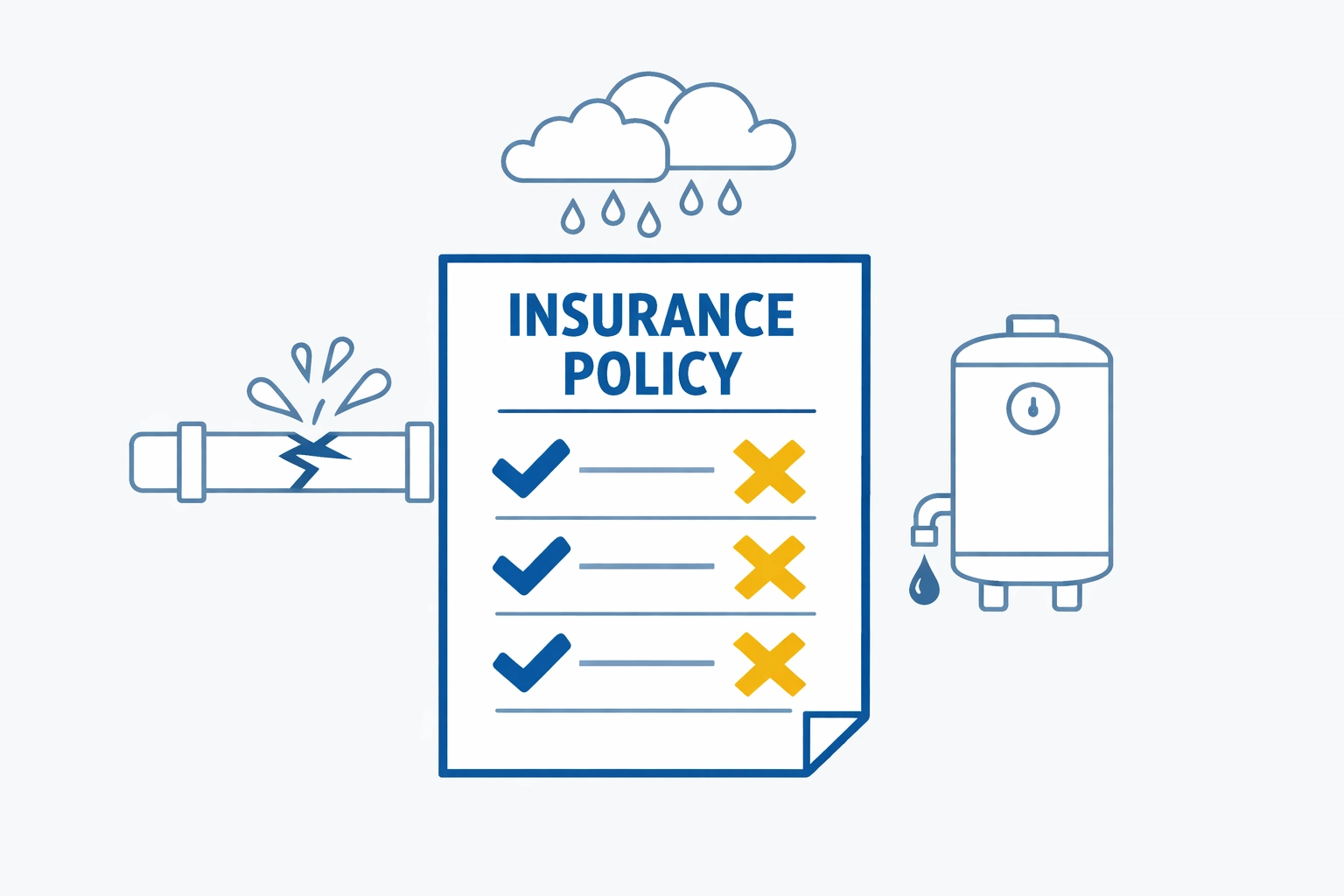
Sudden, accidental water damage (burst pipe, water heater failure, appliance leak) is usually covered under standard homeowners insurance
Flood damage from external sources (storm runoff, rising creeks, sewer backups) typically requires separate flood insurance
Gradual damage (slow leaks, long-term seepage) is often excluded because it's considered a maintenance issue
Read your policy before disaster strikes. If you're in a flood-prone area of Delaware County: like near Darby Creek or Crum Creek: make sure you have flood insurance through the National Flood Insurance Program (NFIP) or a private carrier.
When the water's already in your basement, call your agent immediately. Ask what's covered, what documentation they need, and what your deductible is. Don't assume: clarify.

Mistake #6: Trying to Clean Sewage Backup Yourself
If your basement flooding involves sewage or greywater (from washing machines, dishwashers, or sump pump backflows mixed with outside water), this is not a DIY project. Period.
Sewage contains bacteria, viruses, parasites, and pathogens that can make you seriously ill. Exposure can lead to gastrointestinal infections, skin rashes, respiratory issues, and worse. Delaware County's older sewer systems are more prone to backups during heavy rain, so this is a real risk.
What professionals do:
Wear full PPE (personal protective equipment) including respirators and hazmat suits
Use EPA-registered disinfectants and antimicrobial treatments
Remove contaminated porous materials (drywall, insulation, carpet padding) that can't be safely cleaned
Follow IICRC S500 and S520 standards for safe sewage cleanup
Trying to mop it up yourself with household bleach won't cut it: and insurance companies know it. If contamination spreads or someone gets sick, your claim and your health are both at risk.
For comprehensive sewage cleanup guidance, check out our detailed sewage cleanup process post.
Mistake #7: Ignoring Hidden Moisture Behind Walls and Under Floors
Your basement looks dry. The visible puddles are gone. The carpet's damp but not soaked. You call it good and move on.
Three weeks later, you smell something musty. Black spots appear on the baseboard. Your drywall feels soft. Congratulations: you've got a mold problem, and your insurance company is going to argue you didn't properly mitigate the original water damage.
Here's the truth: Water migrates. It seeps into wall cavities, under flooring, and into insulation where you can't see it. If you don't use moisture meters and thermal imaging to find hidden wet spots, you're setting yourself up for long-term problems.
Professional water damage restoration teams check:
Inside wall cavities (using non-invasive moisture meters)
Under flooring and carpet padding
Behind baseboards and trim
Inside HVAC ducts if water reached them
They also monitor moisture levels daily until everything hits safe "dry standard" levels (under 15% moisture content for most materials). This documentation protects you if a claim question comes up later.
What to Do Right Now If Your Basement Is Flooded
If you're reading this mid-crisis, here's your action checklist:
Shut off electricity to the basement if you can safely reach your breaker panel
Stop the water source if possible (turn off main water valve, fix obvious leaks)
Call your insurance company to report the claim immediately
Document everything with photos and video before moving or cleaning anything
Call a certified water damage restoration company in Delaware County for emergency flood cleanup
Remove portable items to a dry area (but don't throw anything away yet)
Ask about temporary repairs your insurance will cover (like tarps or emergency boarding)
Delaware County basements are part of your home's foundation, literally and figuratively. Protecting them means protecting your investment, your health, and your family's safety.
You don't have to navigate this alone. Professional water damage restoration teams are standing by to handle the heavy lifting, the documentation, the industrial equipment, and the insurance headaches. If you're dealing with flooding right now, help is just a call away.
For more tips on recovering efficiently, visit our guide on how to recover from water damage efficiently.
Don't let a fixable problem become an insurance nightmare. Act fast, document everything, and bring in the pros before hidden damage turns your basement into a costly disaster.
Comments