Do You Really Need Mold Testing After a Leak? Here's the Truth
- info603880
- Jan 29
- 4 min read
So, you just dealt with a leak. Maybe it was a burst pipe in your basement in Berks County, or perhaps your washing machine decided to flood your laundry room in Montgomery County. Either way, you cleaned up the water, dried everything out, and now you're wondering: Do I really need to worry about mold testing?
Here's the truth, it's a question worth asking. And the answer might surprise you.
Let's dive into what you actually need to know about mold testing and inspections after a leak, so you can make the best decision for your home and your family.
Why Mold Testing After a Leak Isn't Just "Extra"
Here's the thing about water damage: what you see on the surface is rarely the whole story.
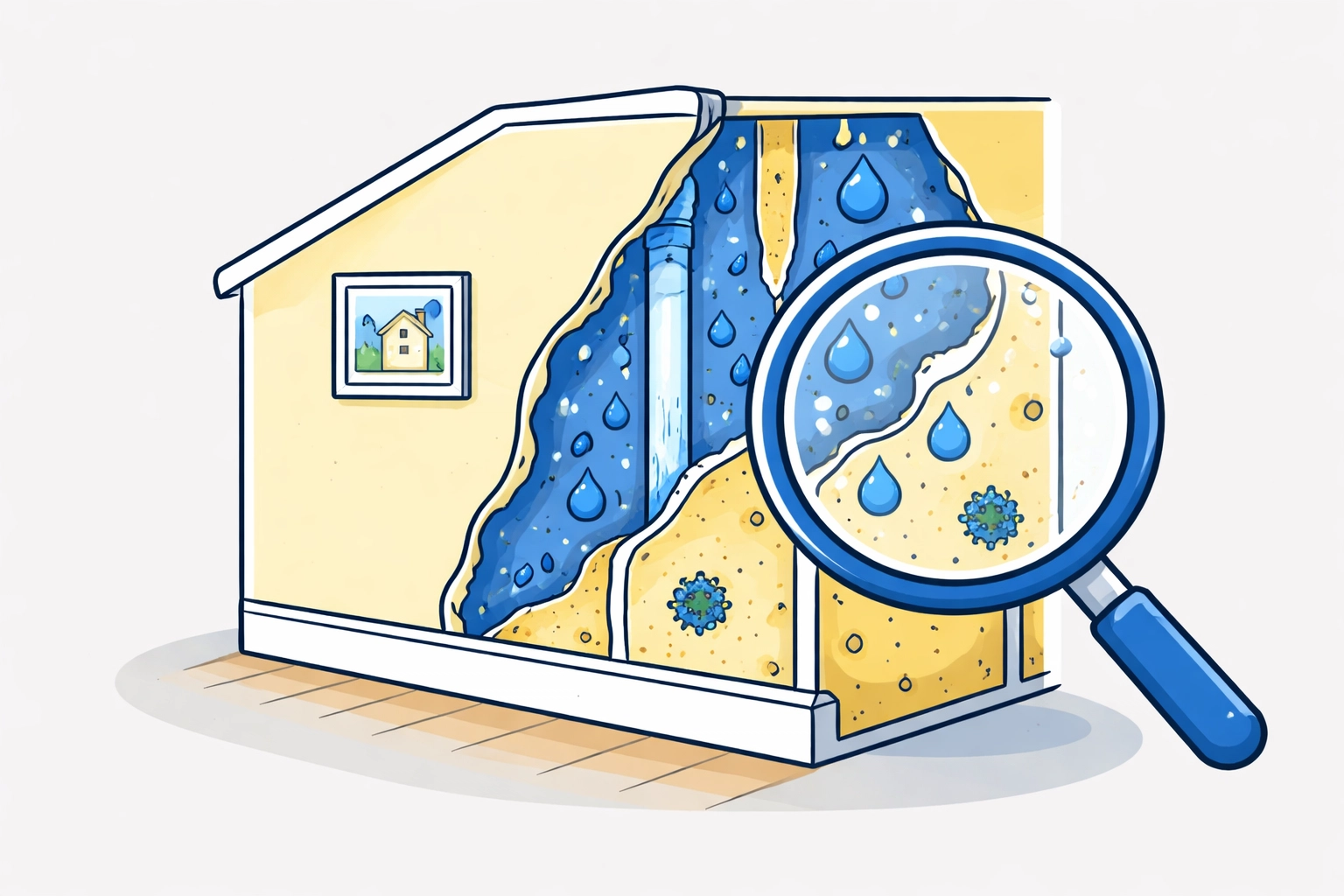
When water leaks into your home, it doesn't just sit there politely on the floor waiting to be mopped up. It seeps. It spreads. It soaks into drywall, crawls under flooring, and absorbs into insulation. Even after everything looks dry, moisture can remain trapped in places you can't see.
And here's where it gets tricky, mold can start growing in hidden areas within 24 to 48 hours of water exposure. That's not a lot of time, especially if you didn't catch the leak right away.
So while your floors might look fine and your walls seem dry, there could be a mold problem brewing behind the scenes. Professional mold testing helps you find out what's really going on before a small issue becomes a big, expensive headache.
The Hidden Mold Problem: What You Can't See Can Hurt You
Let's talk about hidden mold for a second, because this is where a lot of homeowners in Delaware, Chester, and Bucks counties get caught off guard.
You might not see any visible mold. You might not even smell anything at first. But that doesn't mean mold isn't there.
Water from leaks loves to travel to places like:
Behind walls and baseboards
Underneath flooring and carpet padding
Inside ceiling cavities
Within HVAC systems and ductwork
In attic insulation
These are all spots where moisture can linger for weeks without you knowing. And mold? It thrives in dark, damp, hidden spaces. By the time you notice a musty smell or see visible growth, the problem has often spread further than you'd expect.
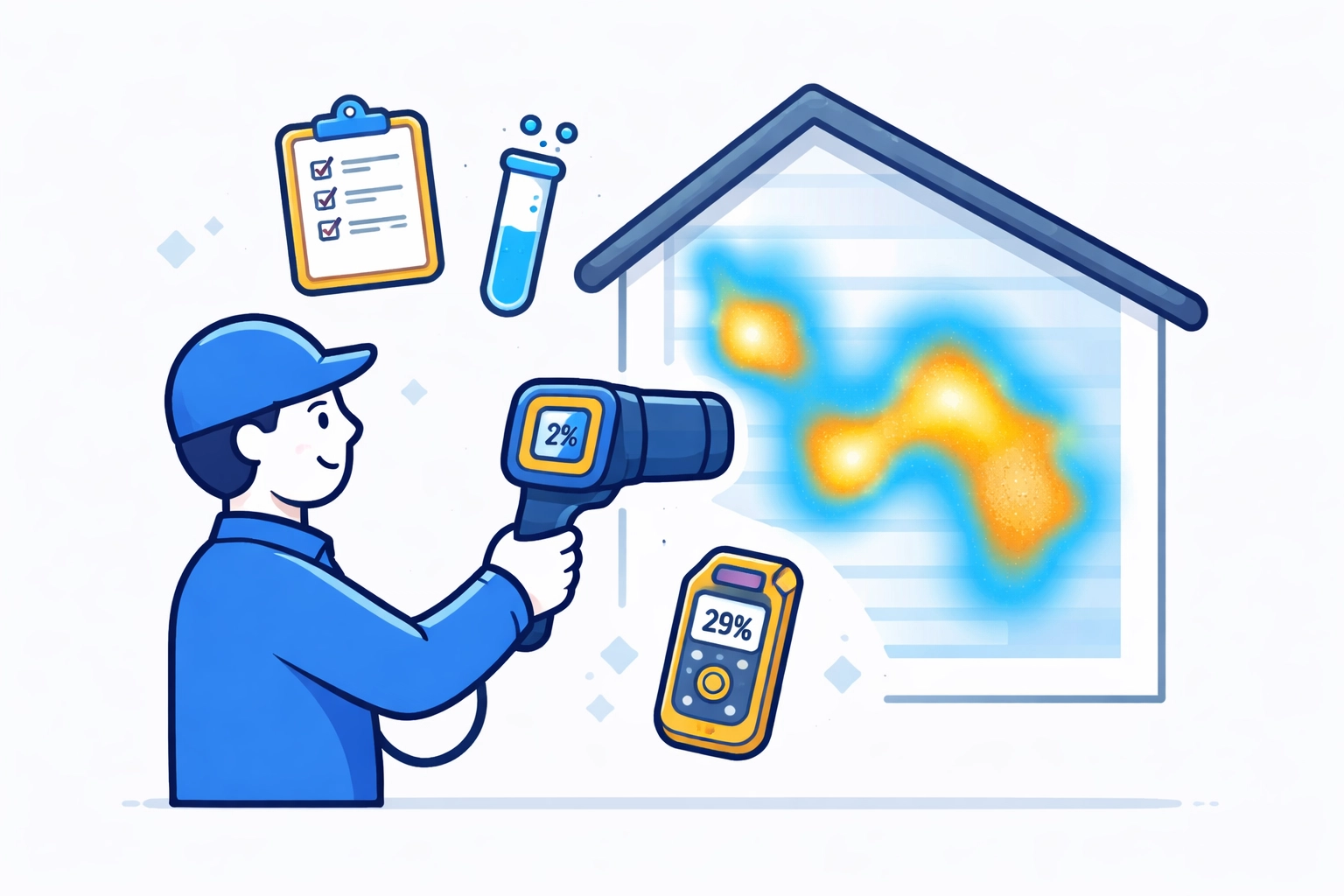
A professional mold inspection uses specialized tools, like infrared cameras and moisture meters, to detect moisture and mold in areas that are impossible to assess with the naked eye. It's like having x-ray vision for your home.
DIY Mold Test Kits vs. Professional Mold Inspections
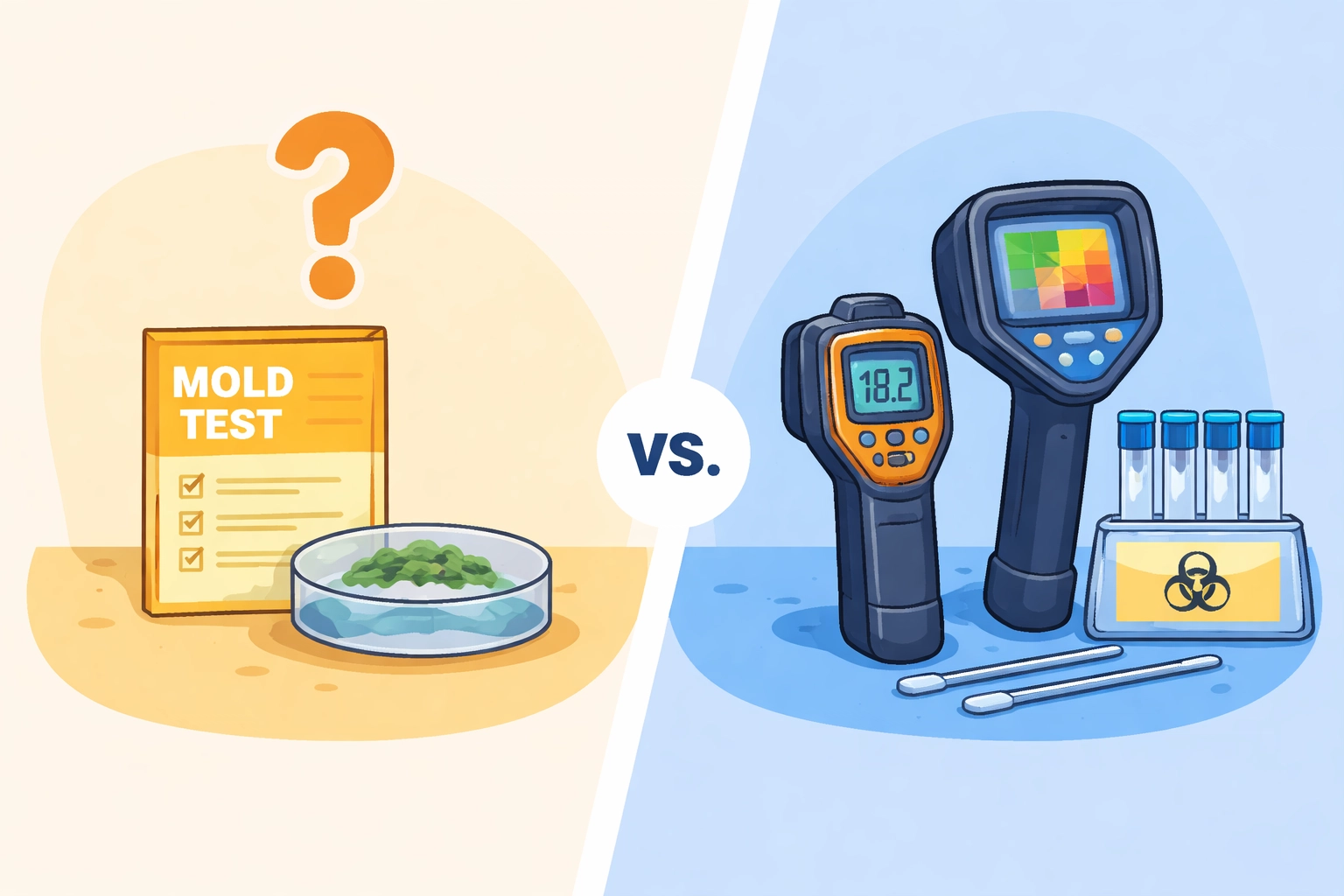
You've probably seen those DIY mold test kits at the hardware store. They're cheap, they're easy, and they promise quick answers. So why not just grab one of those?
Well, here's the honest truth: DIY kits often miss hidden mold entirely.
Most over-the-counter mold tests only collect samples from the air or a single surface. They can't detect mold growing behind your walls or under your floors. Even worse, they can give you false negatives, basically telling you everything's fine when it's not. That false sense of security can lead to bigger problems down the road.
Professional mold testing is a different ballgame. Here's what a trained inspector brings to the table:
Air sampling and surface swabs from multiple locations
Infrared cameras to detect hidden moisture
Moisture mapping to identify problem areas
Lab analysis to identify the specific type of mold and spore counts
Assessment of indoor air quality
When you're dealing with your home: and your family's health: you want answers you can trust. A family-owned local company that knows the homes in Montgomery, Berks, Bucks, Delaware, and Chester counties understands the unique challenges our area's older homes and humid seasons can bring.
When Should You Definitely Get Mold Testing?
Not every tiny drip requires a full mold inspection. But there are certain situations where testing is strongly recommended.
Consider professional mold testing if:
If any of these situations sound familiar, it's worth getting a professional opinion. Better to know now than to discover a major mold problem six months down the line.
What to Expect From a Professional Mold Inspection
If you've never had a mold inspection before, you might be wondering what the process actually looks like. Good news: it's pretty straightforward.
Here's what typically happens:
The whole process usually takes a couple of hours, depending on the size of your home. And the peace of mind you get? Totally worth it.
Why Local Expertise Matters
Here's something that often gets overlooked: not all mold inspectors are created equal.
When you work with a local, family-owned company that serves Montgomery, Berks, Bucks, Delaware, and Chester counties, you're getting inspectors who understand the specific challenges of homes in our area. From older stone farmhouses to newer construction, the building materials, climate, and common water issues vary: and that local knowledge makes a difference.
Plus, when you call a local team, you're not just a number. You're a neighbor. And that means you get the kind of personalized attention and honest advice that big corporate chains just can't match.
The Bottom Line: Don't Guess: Test
Look, we get it. After dealing with a leak, the last thing you want is another thing to worry about. But here's the reality: mold doesn't wait, and it doesn't care about your schedule.
If you've had any kind of water intrusion in your home: whether it was a small drip or a major flood: mold testing gives you the answers you need to protect your home and your family.
You don't have to panic. But you do need to be proactive.
If you're noticing a lingering musty smell, or if you're just not sure whether your home is in the clear after a leak, consider reaching out to a professional for a mold inspection. It's a small investment that can save you from a much bigger problem later.
Want more tips on protecting your home from water damage? Check out our guide on essential water damage restoration tips or learn more about expert mold testing and water damage repair in the Pottstown area and surrounding counties.
Your home is worth protecting. And so is your peace of mind.
Comments