Boost Your Home Safety Instantly with These 5 Water Extraction Service Tips for Pennsylvania Homeowners
- info603880
- Mar 12
- 5 min read
Finding a pool of water in your basement or a soggy patch on your ceiling is enough to make any homeowner's heart sink. Whether it’s a burst pipe during a cold snap in West Chester or a flash flood after a heavy storm in Montgomery County, water damage is a stressful mess. It feels overwhelming, and let’s be honest: panic is a natural reaction.
But don’t fret! While water is a powerful force, you have the power to protect your home. At My Water Damage Hero, we see these situations every day across Berks, Bucks, Delaware, and Chester counties. We know exactly what it takes to turn a potential disaster into a manageable repair.
If you’re dealing with a wet mess right now, or just want to be prepared for the next big PA storm, these five water extraction service tips will help you boost your home safety instantly.
1. Speed is Your Absolute Best Friend
When it comes to water damage restoration, time isn’t just money: it’s your floorboards, your drywall, and your family's health. Water moves incredibly fast. It doesn't just sit on the surface; it soaks into porous materials like wood, insulation, and carpet padding.
Within minutes, water spreads throughout your property, staining walls and saturating furniture. Within 24 to 48 hours, the real enemy arrives: mold. Mold spores love damp, dark environments, and once they take root, you’re looking at a much more expensive mold remediation project.
The "Golden Window" for professional water extraction is the first 24 hours. By getting a team on-site immediately, you can often save materials that would otherwise need to be ripped out and replaced. If you’ve got a major leak, don't wait until Monday morning to call for help.
Looking for more info on how timing affects your home? Check out the speed factor and why 3-hour response times save your Montgomery County hardwood floors.
2. Ditch the DIY Wet-Vac Mentality
We love a good DIY project as much as the next person, but when it comes to emergency flood cleanup, a household shop-vac just won't cut it. You might suck up the standing water you can see, but what about the gallons trapped underneath your floorboards or inside your walls?
Professional water extraction services use industrial-grade equipment that is leagues ahead of what you can rent at a big-box store. We use:
Truck-mounted vacuum units: These provide massive suction power to pull water from deep within carpet fibers and subflooring.
High-capacity submersible pumps: Essential for basements that have several inches (or feet) of standing water.
Industrial air movers: These aren't just fans; they are designed to move huge volumes of air to evaporate moisture quickly.
LGR Dehumidifiers: Low Grain Refrigerant dehumidifiers pull moisture out of the air even in cool temperatures, which is vital for preventing structural rot.
Attempting to dry out a major leak yourself often leads to "secondary damage." This is when the air stays too humid, causing the paint to peel on the other side of the house or mold to grow in a room that wasn't even wet. For a deeper look at this, read why DIY water damage repairs can lead to bigger problems.

3. Demand Hidden Moisture Mapping
If you can see the water, that’s actually the easy part. The real danger is the water you can’t see. Pennsylvania homes, especially older ones in places like Media or Doylestown, often have complex structures where water can hide for weeks.
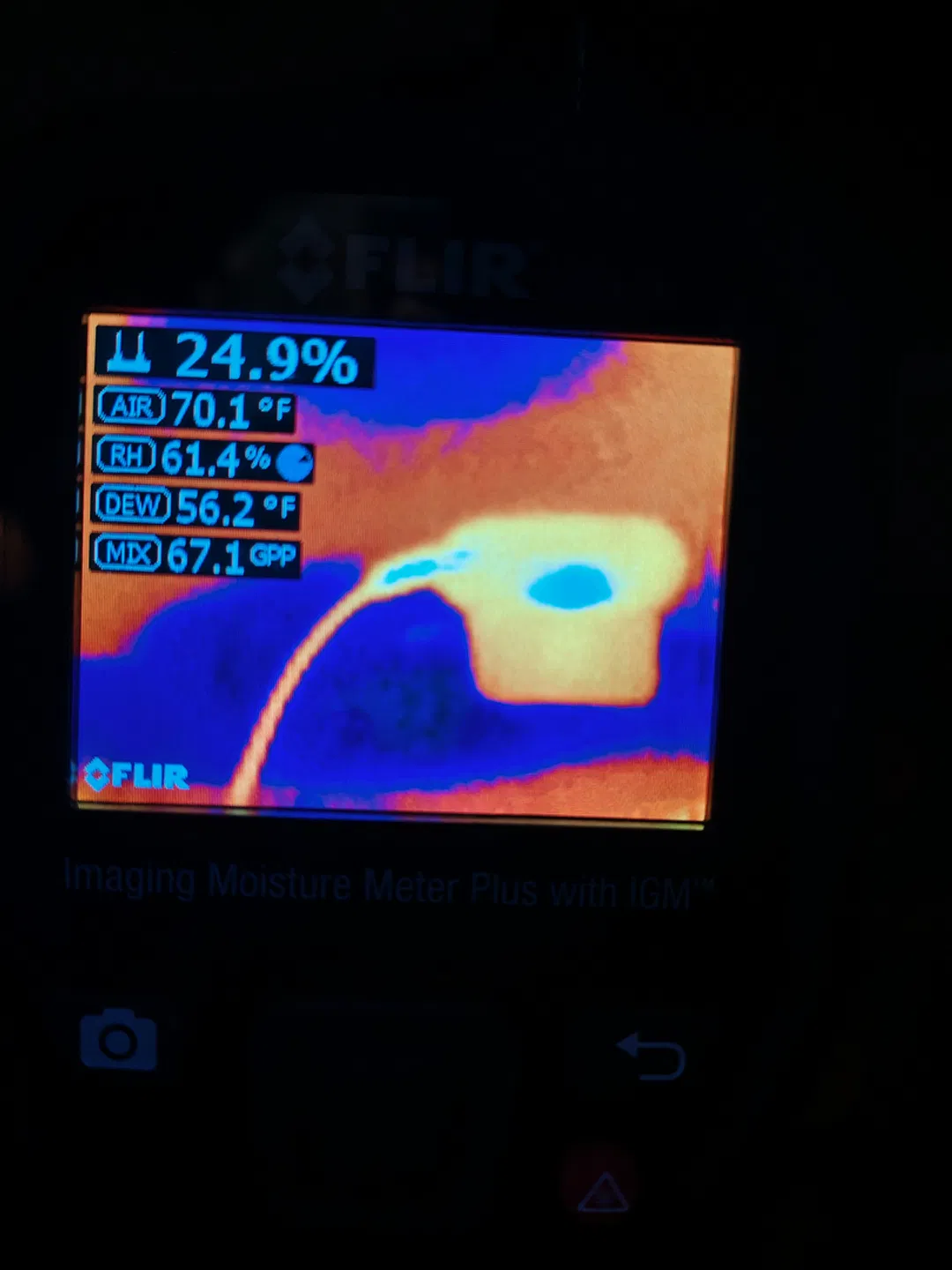
A top-tier water extraction service doesn't just stop when the floor looks dry. They use advanced technology to find hidden pockets of moisture. This is called moisture mapping.
Using FLIR (Forward-Looking Infrared) thermal imaging cameras, professionals can see temperature differences behind your drywall. Since wet areas are usually cooler than dry areas, these cameras "see" the leak without us having to tear down your beautiful walls. We also use specialized moisture meters that can tell us exactly how much water is inside a wooden stud or a concrete slab.
Without this step, you might think your home is safe, only to find a massive mold colony six months later. If you’re curious about how we find these hidden threats, see how we find leaks behind your Bucks County drywall without tearing it down.
4. Prioritize Safety (Electricity and Sewage)
Before you even step into a flooded room, you must consider the "hidden" dangers. Water and electricity are a deadly combination. If your basement is flooded and the water has reached the electrical outlets or your breaker box, do not go in.
Beyond the shock risk, you have to consider the type of water. In our industry, we categorize water into three groups:
Category 1 (Clean Water): From a broken supply pipe or a sink overflow.
Category 2 (Gray Water): Contains some contaminants (like dishwasher or washing machine discharge).
Category 3 (Black Water): This is highly contaminated and dangerous. Think sewage clean up or rising river water.
If you are dealing with a sewage backup in Delaware County, you are dealing with "Black Water." This contains pathogens, bacteria, and viruses that can make your family very sick. Professional teams wear full-body protective gear (PPE) and use specialized antimicrobial treatments to ensure the space is sanitized, not just dry.
Safety is the number one priority. To keep your family safe during a crisis, check out this quick start daily safety checklist for avoiding sewage clean up disasters.
5. Get Help with the Insurance Paperwork
The physical cleanup is only half the battle. The other half is dealing with your insurance company. This can be just as draining as the flood itself!
A reputable water extraction company acts as your advocate. We don't just dry the floors; we document everything. This includes:
Pre-remediation photos: Detailed evidence of the damage before we start.
Moisture readings: Daily logs showing that the drying process is working and meeting industry standards.
Detailed estimates: Using software like Xactimate, which is the industry standard that insurance adjusters use.
By having a professional team handle the documentation, you significantly increase your chances of a smooth claim process. We can often work directly with your insurance provider to handle the billing, taking one more thing off your overflowing plate.

Protecting Your Pennsylvania Home Long-Term
While these tips are crucial for when a disaster strikes, the best way to handle water damage is to prevent it in the first place. Living in SEPA means we deal with humid summers, freezing winters, and plenty of rain.
Simple habits can make a huge difference. For example, a quick 3-minute basement check can help you spot a tiny drip before it becomes a five-figure restoration project.
Remember, if you find yourself standing in a puddle, take a deep breath. You don't have to do this alone. Whether it's water damage restoration, mold remediation, or a complex sewage clean up, the experts are just a phone call away.
Stay safe, stay dry, and keep an eye on those pipes!
Need immediate help? My Water Damage Hero is available 24/7 for emergency flood cleanup across Montgomery, Berks, Bucks, Delaware, and Chester counties. We bring the industrial tools and the local expertise to get your home back to normal fast.
Summary Checklist for Homeowners:
Act Fast: Call for help within the first 24 hours to prevent mold.
Be Safe: Turn off power if it's safe to do so; avoid contact with "black water" (sewage).
Professional Tools: Don't rely on a shop-vac; ensure your restoration team uses LGR dehumidifiers and truck-mounted extractors.
Verify Drying: Ask for moisture mapping to ensure no water is trapped behind walls.
Document Everything: Take photos of everything for your insurance claim before the cleanup begins.
Comments